

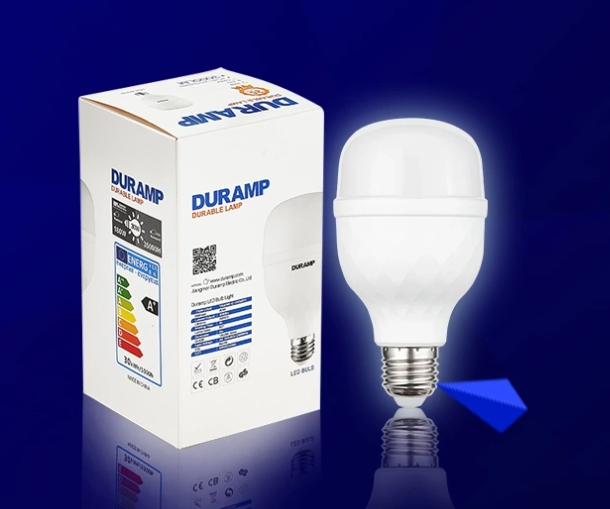
The light bulb is made according to the principle of the thermal effect of electric current. After the bulb is connected to the rated voltage, the current passes through the filament and is heated to an incandescent state (above 2000 degrees Celsius), thus generating heat. Thus, when working, the electrical energy is converted into internal energy and light energy. The structure of the bulb is very simple. On its bottom there are two metal contacts that are used to connect electricity. The metal contacts have two wires that touch a thin metal filament. The filament sits in the center of the bulb and is supported by a glass.
The biggest problem with light bulbs is the sublimation of the filament. Because of the slight resistance difference on the tungsten wire, the temperature is different. In the place where the resistance is higher, the temperature rises higher, and the tungsten wire also sublimates faster, which causes the tungsten wire to become thinner and the resistance further increases. The tungsten wire is blown. It was later found that sublimation of the tungsten wire could be slowed down by replacing the vacuum with an inert gas. Most light bulbs today are filled with nitrogen, argon or krypton gas. Modern incandescent lamps typically have a lifespan of around 1,000 hours.